The backing is one of the most important parts of a carpet mat, even though it is not always visible after installation. It affects grip, flexibility, dimensional stability, moisture resistance, handling and the way the mat sits on the floor.
TPE, TPR and PVC are all practical backing materials, but they do not produce identical results. The right choice depends on the application, floor surface, expected traffic, environmental conditions and target price point.
Why the Backing Matters
A carpet surface provides appearance and helps collect dust or moisture, while the backing supports the complete structure. A suitable backing should help the mat remain stable without making it unnecessarily difficult to roll, package or place.
Backing selection also affects the finished edge, total thickness, weight and storage behavior of the product. For distributor and private-label programs, these characteristics can be as important as surface color because they influence shipping, shelf presentation and customer expectations.
When TPE Is a Practical Choice
TPE is a thermoplastic elastomer that combines flexibility with moisture resistance. It can provide cushioning and stable contact with the floor while remaining suitable for repeated handling. TPE-backed mats are often considered for entrances, corridors, offices, retail spaces and indoor commercial areas.
The exact performance depends on backing thickness, pattern, hardness and production method. Buyers should review a finished sample on the intended floor rather than judging the material name alone.
Where TPR Performs Well
TPR is a thermoplastic rubber known for resilient grip and resistance to repeated bending. It can be a useful choice for mats that need to be rolled, moved or handled regularly. The material also offers moisture resistance and can contribute to cushioning and sound reduction.
For commercial programs, confirm how the TPR backing behaves at the expected temperature and whether the mat needs to remain flexible during storage or transport. Backing texture and thickness should be matched to the floor surface and product size.
Why Projects Choose PVC
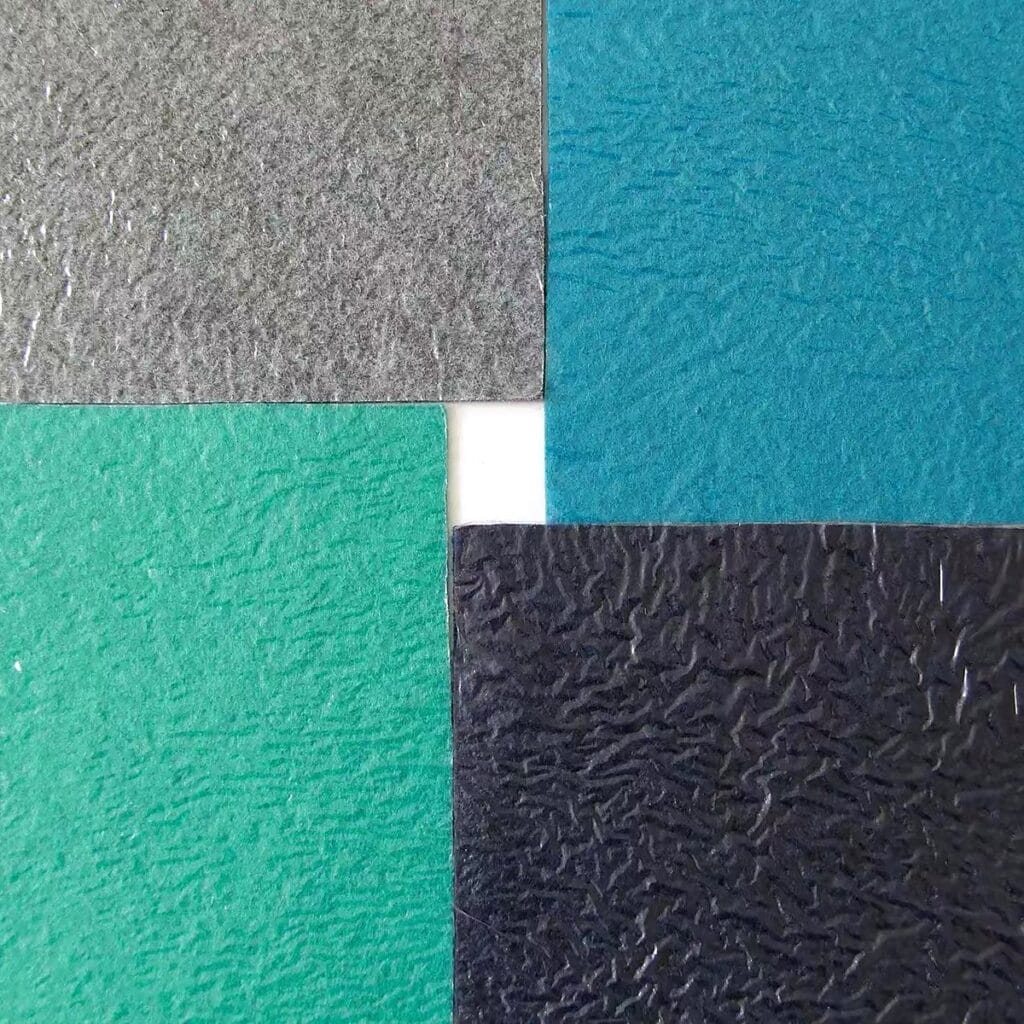
PVC backing provides strong dimensional stability and can form a dense, durable base. It is commonly considered for entrances, work areas, retail locations and other commercial spaces where the mat must remain flat and resist moisture or routine environmental exposure.
PVC-backed products can be supplied in roll form or as finished individual mats. Because the backing can add weight and stiffness, packaging dimensions and handling requirements should be reviewed before production.
Compare More Than the Material Name
Two mats using the same backing family can perform differently if their thickness, surface pattern, compound hardness or bonding quality is different. A meaningful comparison should include finished-mat weight, dimensions, edge quality, grip on the intended floor, odor expectations, bending behavior and moisture exposure.
Samples should be tested on clean, representative floor surfaces. Dust, floor coating and moisture can all affect grip, so product evaluation should reflect real conditions.
Define the Finished Mat
A complete specification should cover surface material, backing type, backing thickness, total thickness, dimensions, color, edge treatment, packaging and labeling. It should also describe the intended use and any market-specific requirements.
Explore our Non-Slip Backed Mats or contact us to compare TPE, TPR and PVC constructions for your program.